Calibration audit trail
Complete
Probe calibrations indexed in logbook with timestamps.
Subsea integrity · Cathodic protection survey
Cathodic protection potential survey and anode depletion assessment for subsea assets.
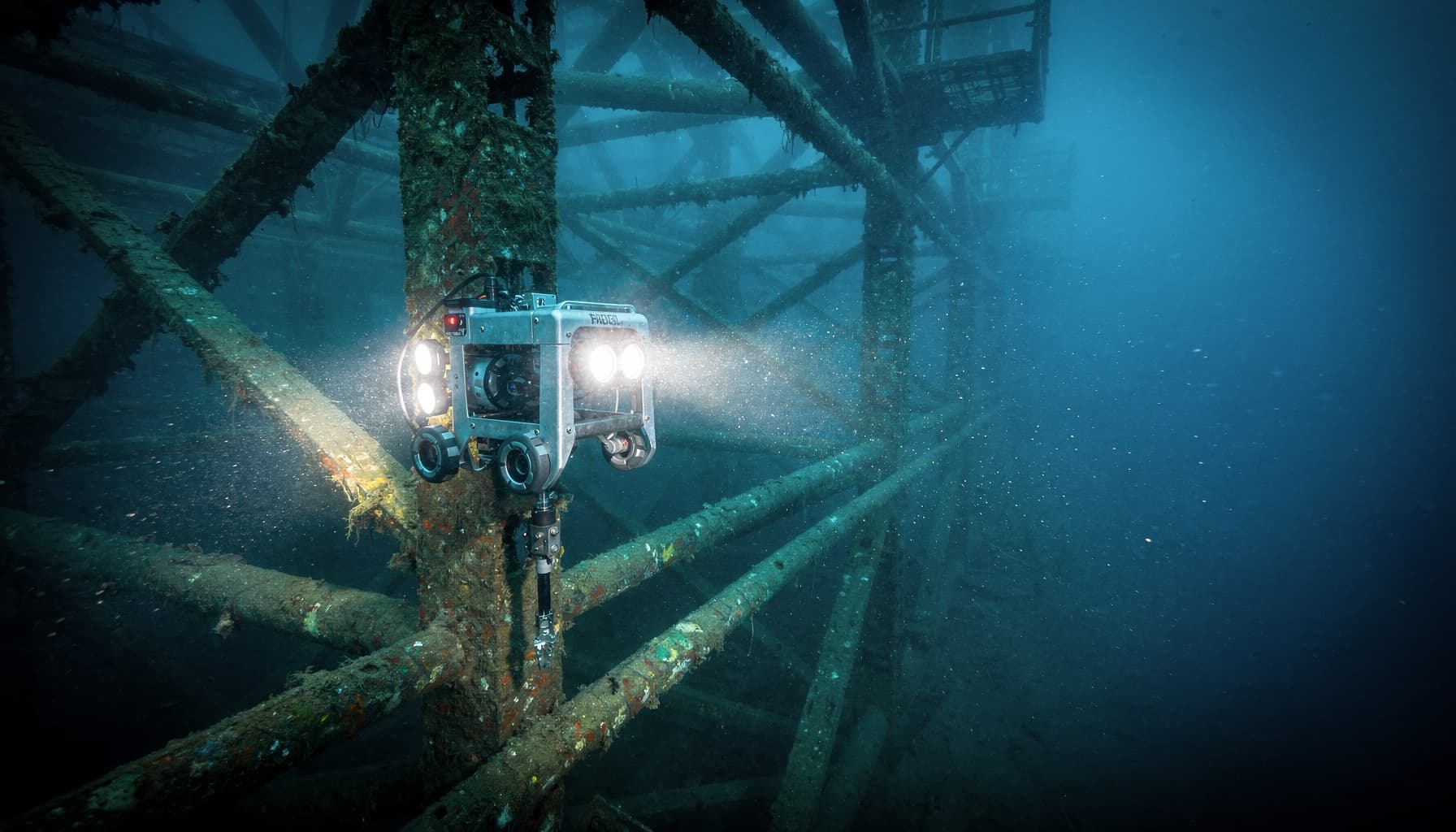
Representative challenges SurveyIQ addresses — synthetic scenario, not a client claim.
CP survey data is stored separately from ROV navigation and structure context.
Probe calibration records are difficult to audit during client review.
Anode depletion estimates rely on manual spreadsheet calculations.
Trend comparison to previous campaigns lacks structured historical indexing.
From scope intake to deliverables — a demonstration workflow for cathodic protection survey.
Upload or paste the CP survey scope. SurveyIQ structures objectives, methods, and deliverables for review.
Blocking and advisory gaps are surfaced early — vessel nomination, sensor configs, reporting templates, and interface points.
Draft acquisition, HSE, marine, and reporting procedures are generated with source references for human approval.
Approved procedures become executable work packages with owners, dependencies, and readiness states.
Offshore teams work from one project truth — department cards, stop-work awareness, and today's plan.
Department logbooks capture events, downtime, QC snapshots, findings, and DPR source notes in real time.
Daily progress reports and final deliverables are assembled from verified project facts, not end-of-shift reconstruction.
Illustrative metrics for demonstration — not measured client results.
Calibration audit trail
Complete
Probe calibrations indexed in logbook with timestamps.
Outlier detection
QC-flagged
Readings outside criteria trigger review workflow.
Deep node coverage
ROV-linked
ROV dives tied to CP work packages and evidence.
Trend reporting
Structured
Report sections built from verified reading sets.
Yes. Calibration events are recorded in department logbooks with evidence attachments.
ROV dives for deep-node readings are work packages linked to CP survey procedures.
No. All CP values and asset names are fictional representative examples.
Book a demo, send a scope of work, or watch the product overview — all synthetic examples, no client data required.